
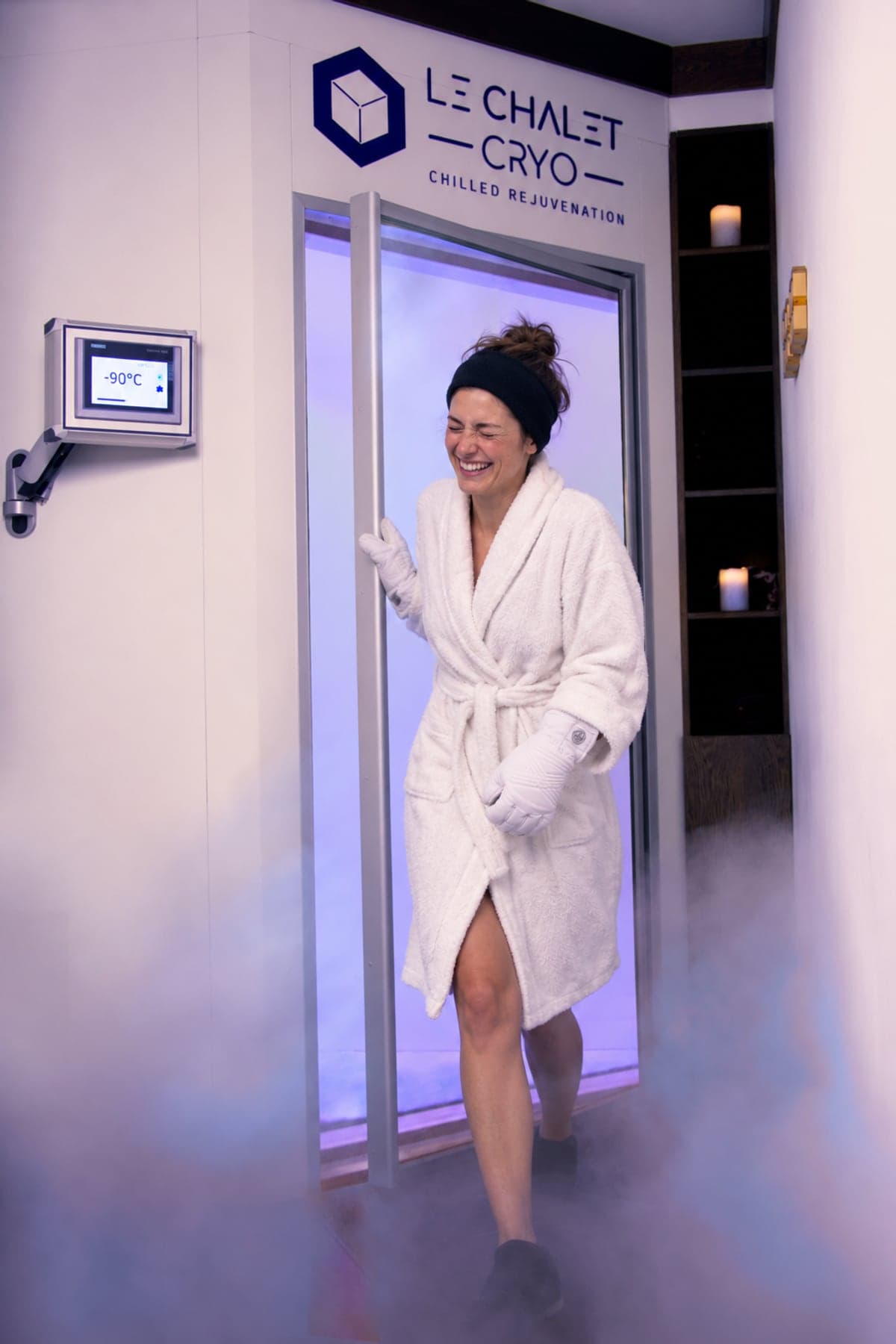
Cold-water dips are having a moment, and plenty of people who come to Le Chalet Clinic already own a tub in the garden. The most common question they ask is whether whole-body cryotherapy is the same thing, only colder. It is not the same thing. Here is how the two actually compare.
Temperature: −90°C is not what it sounds like
An ice bath sits somewhere between 2°C and 10°C. The cryotherapy chamber runs to −90°C. On paper that is not a contest — and yet almost everyone finds the chamber easier to stay in. The reason is the medium. Water pulls heat from the body roughly twenty-five times faster than air, and wet skin loses heat faster still. Dry, still air at −90°C feels sharp and bracing; water at 5°C feels like it is getting inside you.
The chamber is colder. The bath feels colder. Both statements are true.
How each one feels
In the water, the first thirty seconds are the hard part: the gasp, the tight chest, the urge to get out. Then you settle, and the challenge becomes staying still while your hands and feet go numb. You climb out wet, shivering, and spend the next while warming up.
In the chamber, the cold builds instead of hitting. The first minute is brisk, the second is properly cold, the third asks for some slow breathing — and then the door opens. You can move around, your skin stays dry, and the warmth comes back within a couple of minutes of stepping out, as a pins-and-needles glow rather than a shiver. A member of the team is with you the whole time.
Time and convenience
This is where the two really part company. An ice bath is five to fifteen minutes in the water — plus filling it, plus finding the ice, plus drying off and warming up. Realistically it is a forty-minute ritual, and it lives at home or at the gym.
Cryotherapy is three to four minutes in the chamber and about fifteen minutes door to door, with no shower before or after because nothing gets wet. It fits between two meetings. That, more than any temperature, is why clients in Canary Wharf use it on weekday afternoons and keep the tub for weekends.
A chamber is not a cryo sauna
One more distinction, because it matters when you compare prices online. A cryo sauna is an open-topped tube cooled with liquid nitrogen; your head stays outside, the cold is uneven, and there is gas in the mix. The chamber at Le Chalet is whole-body: an electric, nitrogen-free room where you walk in, move about, and your head — where a large share of your cold receptors sit — is in the cold with the rest of you. Even cooling, no gas, dry air.
Which should you choose?
- Choose the ice bath if you want the ritual, you have the space and the time, and the shock is part of what you enjoy.
- Choose cryotherapy if you want the cold without the wet, in a quarter of an hour, on a working day.
- Do both — plenty of clients do. They are different experiences of cold, not substitutes.
If you have never tried the chamber, read what to expect at your first session. Your first visit is £29; directions are on our Canary Wharf page.
Common questions
Is cryotherapy colder than an ice bath?
By the numbers, far colder: the chamber runs to −90°C against roughly 2–10°C for an ice bath. But dry air carries heat away much more slowly than water, so three minutes in the chamber feels more manageable than ten minutes in the water.
Which takes longer, cryotherapy or an ice bath?
Cryotherapy is three to four minutes in the chamber and about fifteen minutes door to door. An ice bath is typically five to fifteen minutes in the water, plus filling, warming up and drying off.
Do you get wet in cryotherapy?
No. The chamber uses dry, cold air, so you step out dry and need no shower — which is the practical reason it fits a lunch break and an ice bath rarely does.
Is whole-body cryotherapy the same as a cryo sauna?
No. A cryo sauna is an open-topped tube cooled with liquid nitrogen, with your head outside. Whole-body cryotherapy at Le Chalet is an electric, nitrogen-free room where the whole body, head included, is in the cold and you can move around.
Can I do both?
Yes. Some clients keep cold-water dips for weekends and use the chamber during the working week because it is quicker and dry. Neither replaces the other; they are different experiences of cold.